
Made by DogTooth Design
Interpretive signage, illustrations & digital interactive
Portfolio
- All
- Signs
- Illustration
- Interactive


Interactive eBook
An eBook introduction to modern art for young readers. “Once upon a time, there were five small kittens. One day their Mom sent them to bring fish sticks to their Auntie Bobcat...” The kittens need to jump back home, but they find their way goes through strange and colorful places. The landscapes aren’t quite recognizable – they just sort of evoke feelings. Hmmm, what could it be? It’s abstract art!
- DogTooth Design
- An Abstract Journey
- 3 to 8
- Amazon Kindle Store
Interactive Online Tool
To promote the use of sit-stand desks, resources were assembled to inform website visitors about the science behind their reported health benefits. With metabolic improvements being one known benefit, an interactive calculator to measure desks’ impact by calories burned was conceptualized and developed.
Interactive Online Tool
To improve customers’ work experiences, ergonomic positioning of equipment is central to comfort and satisfaction. An interactive calculator was conceptualized and developed to guide website visitors in properly configuring their workspace according BIFMA standards.
Interactive Online Tool
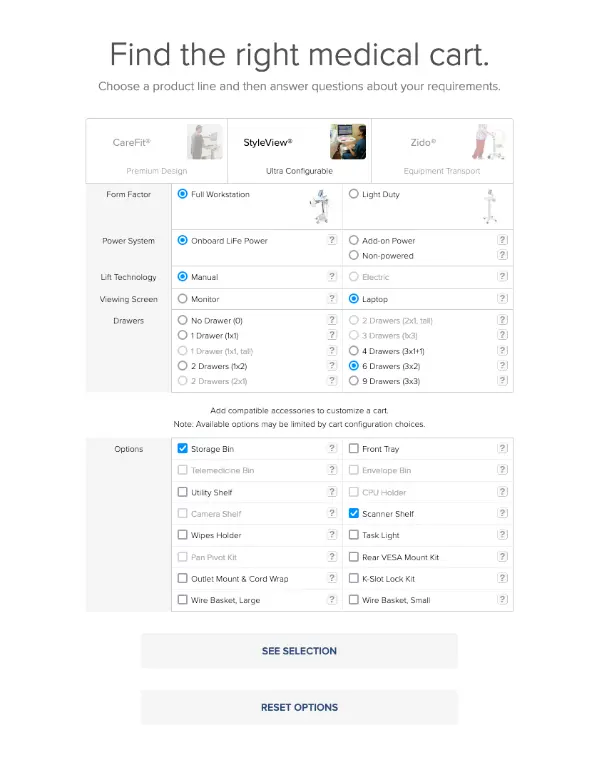
Medical carts are specialized and varied in their configurations. To empower customers in finding the right solution, a selection guide was conceptualized and developed to step users through their choices.